Getting a Better View from the Water

Inventorying shoreline zones on surface waters throughout Anoka County serve as valuable tools for assessing lakeshore and riverbank conditions, comparing current conditions to previous years to identify changes, and for prioritizing project implementation. ACD recently purchased a 360° video camera that has 4 high-definition lenses and a rugged design, to be used outside in the elements. The camera takes continuous video that is Geo-located and stitched together creating a final GPS video that is viewable from all angles. Following a day on the water with the 360° camera, videos are uploaded to Google Street View Studio, a new application recently released by Google. 

Like a Road That Shows Up Blue in Google Street View, You Can Place the Person Down on the Blue Track on the Water Body
Oak Glen Creek, Fall, 2023. You Can Click or Use Keyboard Arrows To Move Your Way From One Image To The Next

Once uploaded to the Google Studio App, the videos are public and accessible to anyone. ACD utilizes these videos to compile shoreline reports, which describe erosion severity and provide recommendations for project needs. Shoreline videos along Martin, Coon, Linwood Lake, the southern portion of the Mississippi River, and Oak Glen Creek were collected throughout 2023 and are now available to view. Click on the individual links above to begin exploring. Videos along the Rum River were also collected and will be available to the public soon!

For more information contact Kris Larson, Water Resource Specialist, at This email address is being protected from spambots. You need JavaScript enabled to view it.. 

  2720 Hits

New Board Member at ACD!

ACD has a new Board Member for District IV. Kate Luthner was officially sworn in on November 20, at the ACD office. Kate is a 20-year resident of Minnesota and lives with her husband and three kids in Columbus. She enjoys hiking, biking, gardening, and reading and painting for those cold winter months. Kate previously served on the Forest Lake Area School Board and volunteers with several other local organizations. Kate has a BA from Cabrini University and an MBA from the University of St Thomas. She is excited to learn more about the role of SWCD's and how ACD is working to preserve and enhance the world we all share.  

  1799 Hits

Now Taking Tree and Shrub Orders!

ACD is now taking orders for the 2024 tree sale! The district offers a variety of species including black cherry, mixed oak, maple, lilac and pine trees. Trees can be purchased as bare root seedlings in bundles of ten for $23.00, or twenty-five for $45.00, not including tax. Mixes of native prairie seed are also available. You do not need to be an Anoka County resident to order. Click here to learn more and place your order today! For more information contact Kathy Berkness, Office Administrator, This email address is being protected from spambots. You need JavaScript enabled to view it.

  6215 Hits

Beavers Connecting Rivers to Floodplain Wetlands

During a recent site visit to explore wetland restoration opportunities, ACD staff came across a fantastic example of beavers' "engineering" skills in action! A series of three beaver dams, located near the outfall of a Rum River tributary, were effectively slowing and spreading the stream's flow into the surrounding floodplain wetlands. Healthy connections between streams and their floodplains provide numerous water quality and habitat benefits, and in this case those benefits also extend to the Rum River immediately downstream.

Many streams in modified landscapes take on excess water from artificial drainage features like ditches and storm pipes. Over time and especially during extreme precipitation events, these higher volumes of water often increase erosion within the stream, which can lead to the straightening and downward-cutting ("downcutting") of the stream channel and, as a result, the disconnection of the stream from its floodplain (see the figures below, produced by American Rivers). 

Connected Floodplain
Vertically Disconnected Floodplain

Floodplain reconnection efforts are an increasing priority amongst many conservation organizations, but they can be costly and complicated – particularly if development has occurred within the floodplain. However, in areas where streams have room to spill into their floodplains without causing damage, allowing and even promoting beaver activity can be a cost effective way to help restore riparian corridors. Learn more about the benefits of beavers in the articles below. 

- University of MN Study 

- King County, WA

- Riding Mountain National Park, Canada

For more information contact Breanna Keith, Water Resources Technician, at This email address is being protected from spambots. You need JavaScript enabled to view it. 

  2649 Hits

Project Update: Dellwood Park Stabilization

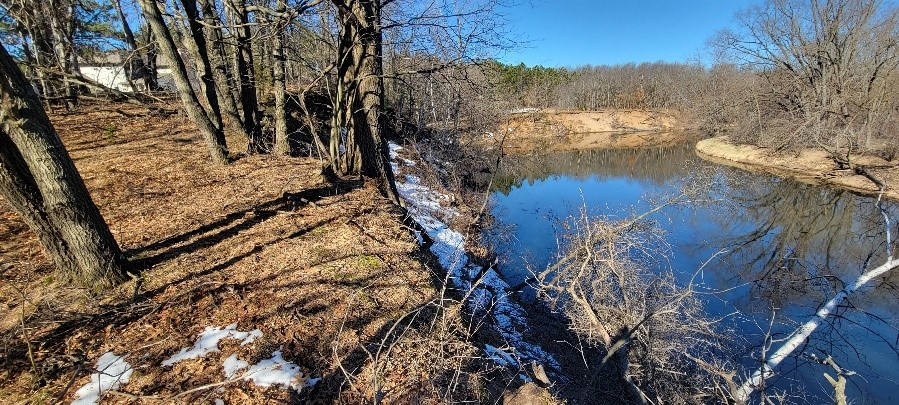
Construction is complete for a Rum Riverbank stabilization at Dellwood River Park in St. Francis. Erosion of the riverbank was resulting in the loss of numerous trees into the river and was threatening a popular local walking trail. The project design features three primary protection measures.

  1. Two severely eroding zones of riverbank were armored with rock riprap, and 14 large tree rootwads were added as in-stream habitat.
  2. Three rock bendway weirs were installed, protruding at 45° into the river. These low-lying features, will push flow and erosive scour back toward the middle of the channel, rather than along the outer bank.
  3. And finally, the less severely eroding areas of riverbank were armored with cedar trees in a bio-engineering technique called "cedar tree revetments".

In total, this project stabilizes 630 feet of riverbank, enhances 0.75 acres of in-stream and riparian habitat, and reduces annual loading into the river by 60 tons of sediment and 51lbs of phosphorus. The project also incorporates multiple features to enhance fishing opportunities and provide additional in-stream habitat. 

Previous Bank Conditions, 2022
Lead Staff, Jared Wagner, Post-Construction, November 2023

For more information contact Jared Wagner, Water Resource Specialist, This email address is being protected from spambots. You need JavaScript enabled to view it. 

  2495 Hits

New Video Highlights the Ups and Downs of Growing Communities

"When Development Comes to Town" is an animated video directed toward local decision makers that tackles some of the challenges and opportunities presented by growth in our small communities. Developed by the Lower St. Croix Watershed Partnership and East Metro Water Resources Education Program, this fast-paced video runs through a gauntlet of topics in about ten minutes, introducing the viewer to concepts ranging from shoreland ordinances to Minimal Impact Design Standards (MIDS). This video masterfully weaves together complex insights and downhome practicality with just the right amount of visual interest and is a 'must watch' for new, or even experienced, elected officials, staff and planning commission members for local governments. Click the link and enjoy! When Development Comes to Town

Contact Chris Lord, District Manager, This email address is being protected from spambots. You need JavaScript enabled to view it. with questions. 

  1889 Hits

Shout Out to Our Amazing Volunteers!

 ACD would like to send out a big thanks to our hardworking volunteers for all their great work during the 2023 monitoring season. State-wide data networks are made up of thousands of dedicated volunteers and provide some of the oldest and most reliable data in the state. These historical data sets are crucial for accurate trend analysis and assist in making informed management decisions. The data provided by volunteers helps verify high rainfall totals, provides critical information during flooding events, monitors drought conditions, and provides needed guidance on Minnesota's changing climate. Some of ACD's volunteers have been long time participants and have contributed data for over 15+ years.

The Volunteer Precipitation Monitoring network includes more than 20,000 volunteers nationwide who measure daily rainfall. Explore climate data through the Minnesota State Climatology database https://climateapps.dnr.state.mn.us/index.htm.
The Lake Level Monitoring Program documents seasonal fluctuations of water levels in around 1,050 lakes throughout Minnesota. Explore lake data through the Minnesota 'Lake Finder' database. https://www.dnr.state.mn.us/lakefind/index.html

For more information contact Kris Larson, Water Resource Specialist, at This email address is being protected from spambots. You need JavaScript enabled to view it..


"Climate is more than just numbers." – Jim Zandlo

  2031 Hits

Bundling for Healthier Lakeshores

ACD Staff and Interested Contractors Meeting to Review Upcoming Lakeshore Stabilization Project on Martin Lake

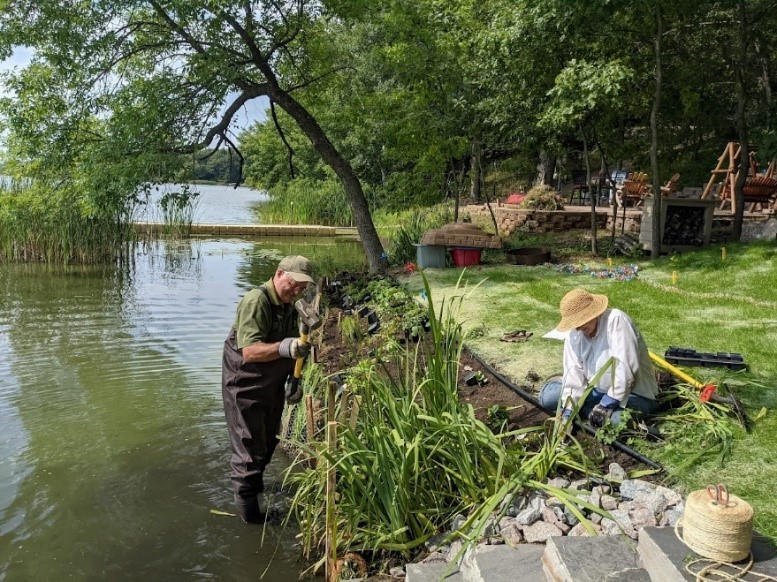
Eight Martin Lake residents, in collaboration with ACD, are bundling their individual lakeshore improvement efforts into one larger project. By joining efforts, they are hoping to save money while making the work more attractive to contractors. It seems to be working, as 15 contractors joined in the bidding process!

This upcoming project is being coordinated by ACD, who has completed designs and will be providing construction management. ACD has also been able to incorporate three state grants, making the project even more affordable. In exchange, the landowners are installing lakeshore stewardship practices that go above and beyond – utilizing natural materials, native plant buffers, and aquatic vegetation for habitat. Collectively, we'll make a healthier lake.

For a fun & informative 8-minute video about healthy lakeshores, watch ACD's video "Our Lakeshore Connection." For more information contact Jamie Schurbon, Watershed Project Manager, This email address is being protected from spambots. You need JavaScript enabled to view it. 

  2022 Hits

Living Large on a Small Lake

Minnesota boasts an impressive 12,208 lakes, as classified by the Minnesota DNR. Among them, 8,402, or roughly 69%, are classified as 'natural environment lakes.' Anoka County is home to several natural environment lakes including Fawn, South Coon, and Island Lakes.

What defines a natural environment lake? These are the smaller, shallower lakes, typically less than 150 acres in size and less than 15 feet deep. They come with numerous developmental constraints and are particularly sensitive to disturbance. With lakeshore properties in high demand across Minnesota, many natural environment lakes are now being earmarked for development. However, it's important to note that the lakeshore experience offered by these lakes might not align with the typical desires for boating or swimming that potential buyers often have.

Learn more about natural lakes on November 8th through a webinar featuring Joe Bischoff, an aquatic ecologist at Barr Engineering Co. Joe will delve into the intricacies and benefits of natural environment lakes. Additionally, some of the ongoing local conservation efforts to monitor and protect natural environment lakes will be highlighted.

Register today at tinyurl.com/small-lakes

  2380 Hits

Rum River Revetments Phase 2

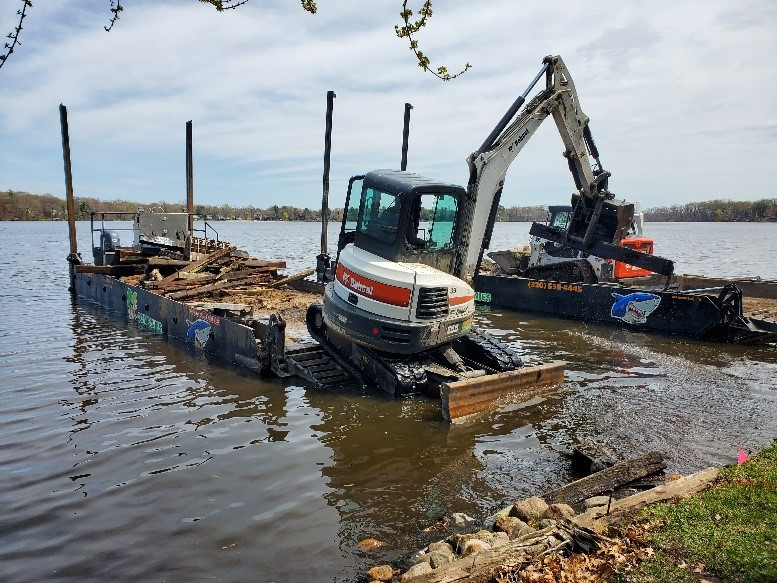
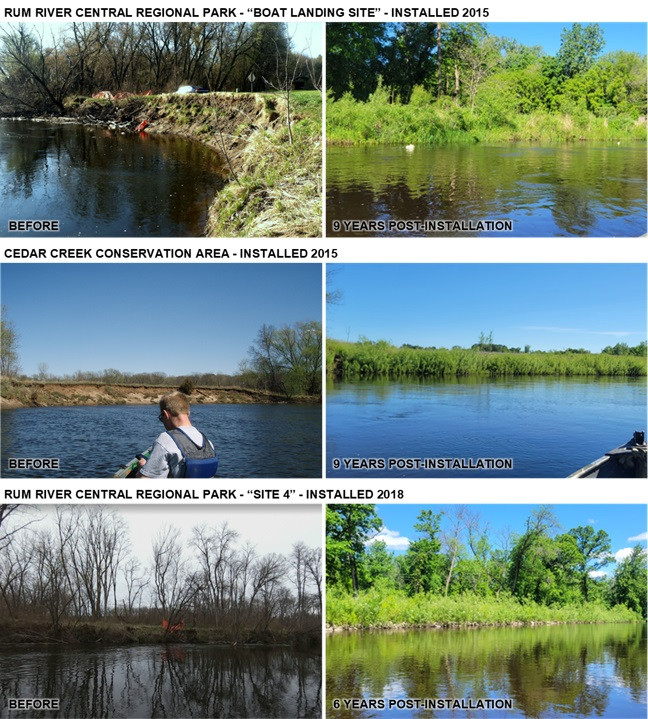
ACD was awarded a contract with the Anoka County Parks Department to complete 2,500' of cedar tree revetments along the Rum River in Anoka County between 2023 & 2026. This project is being funded through a Clean Legacy Partners grant that was awarded to Anoka County Parks in 2023. The work will be completed through a partnership between ACD, Anoka County Parks, and the Conservation Corps of MN. 

Accepted Project Proposal

For more information contact Kris Larson, Water Resource Specialist, at This email address is being protected from spambots. You need JavaScript enabled to view it.

  2274 Hits

Project Update: Apex Pond Enhancement

September, 2023 - De-watering of Current Pond, Tree Removal  
October, 2023 - Water Storage Capacity Increased, Plantings to Come

Construction of the Apex Pond enhancement project in the City of Fridley is nearly complete (see pictures above). The only remaining elements are to spread native seed and lay erosion control blanket over the upper slopes surrounding the pond. Apex Pond in the City of Fridley was originally constructed in 1999 to help control the rate of stormwater runoff entering Springbrook Creek from nearly 90 acres of residential neighborhoods. ACD, in partnership with the City of Fridley and the Coon Creek Watershed District (CCWD) identified an opportunity to enhance the water quality treatment capacity of Apex Pond by increasing the pond's storage volume.

You can also check for project updates on the City of Fridley's website: https://www.fridleymn.gov/1655/Apex-Pond-Enhancement-Project.

For more information contact Mitch Haustein, Stormwater and Shoreland Specialist, at This email address is being protected from spambots. You need JavaScript enabled to view it..

  2480 Hits

It's Time For Buckthorn Busting

Fall is a great time to manage buckthorn on your property. Common and glossy buckthorn are invasive woody shrubs which aggressively outcompete native plants, disrupting the habitat benefits they provide. Buckthorn chemically alters the soil, creating an inhospitable environment for other plants.
Buckthorn leaves stay green longer than most other Minnesota woodland trees and shrubs so you'll easily notice them in mid to late October.
Common buckthorn (Rhamnus cathartica) can be found in upland forests. Look for the thorn, which can be found at the end of some branches. Glossy buckthorn (Frangula alnus) tends to grow in slightly wetter areas but can be found in a variety of habitats. There are no thorns. Look for the rust colored terminal bud.

New research from the University of MN suggests that buckthorn seeds do not persist in the soil for 6+ years as was previously thought. Their findings suggest that over 97% of seeds germinate in the first year. As you manage buckthorn, aim to prevent seed production on mature plants with mid-summer cutting and follow up with treatment of the small sprouts for the best results.

See ACD's buckthorn fact sheet for tips on identifying buckthorn, to learn about native look-alikes, and compare methods for controlling common and glossy buckthorn. For more information contact Logan Olson, Restoration Technician, at This email address is being protected from spambots. You need JavaScript enabled to view it.

Common Buckthorn
Glossy Buckthorn
  2439 Hits

Pollinators and Partnerships

 ACD strives to build resilient pollinator corridors throughout Anoka County. This goal is accomplished by protecting and enhancing existing habitat and creating new habitat. ACD is fortunate to have local partners who also share this vision and are helping identify unused turf areas that can be converted to native plantings. ACD is currently working with the Cities of Fridley and Blaine to convert turf into prairie plantings in public green spaces. Half an acre of turf is being converted in Fridley's Commons Park and 0.3 acres of turf to prairie at Blaine's Laddie Lake Park. Staff from both cities prepared the sites and mowed the sites to prevent weeds from seeding. ACD staff seeded the sites in the spring. Members of the Cities and multiple volunteer groups planted native grasses and wildflowers to add to the seed mix.

These projects are funded by BWSR's Habitat Enhancement Landscape Pilot (HELP) grant. Other ACD HELP turf to pollinator projects are at Coon Lake County Park, Bunker Hills Regional Park and Ramsey River's Bend Park. The BWSR HELP grant also provides funds to enhance native prairies at the Cedar Creek Conservation Area, Bunker Hills Regional Park, Rum River Central Regional Park, Rice Creek Chain of Lakes Park Reserve and Mississippi West Regional Park.

One way to help these projects is to donate your native prairie seeds, including milkweed seed. See ACD's previous post about milkweed seed collection. Watch this short video to see butterfly milkweed seed cleaning

For more information contact Carrie Taylor, Restoration Ecologist, at This email address is being protected from spambots. You need JavaScript enabled to view it.

  2236 Hits

Dellwood River Park Shoreline Stabilization – Project Update

Construction is set to take place in October along 630-feet of eroding Rum Riverbank at Dellwood River Park in St. Francis. Erosion of the riverbank is causing numerous trees to fall into the river and is threatening a popular local walking trail. The project design features three primary protection measures;

  • 1)Two severely eroding zones of riverbank encroaching on the trail will be built back out, armored with rock riprap, and have large tree rootwads added as in-stream habitat elements. The riprapped length of bank will total approximately 180-feet in length. Large boulders will be strategically placed within the riprap to allow enhanced shore fishing opportunity.
  • 2)Three bendway weirs constructed of rock will protrude at 45° into the river. These low-lying, linear features will be submerged under the water (except during very low flows), and will push flow and erosive scour back toward the middle of the channel, rather than along the outer bank. They will also add variable flow areas and habitat value in the channel. These will be great features to cast around for any fisher folks from shore!
  • 3)And finally, the less severely eroding areas of riverbank will be armored with anchored cut cedar trees in a technique called a "cedar tree revetment". Cut eastern red cedars will be cabled together in a shingled fashion along the bank and secured with earth anchors driven into the soil. This is a softer armoring approach than rock which should help the bank stabilize, vegetate, and heal over time naturally before the cedar trees eventually rot away.

For more information contact Jared Wagner, Water Resource Specialist, This email address is being protected from spambots. You need JavaScript enabled to view it. 

  2408 Hits

Septic System Fix-Up Grants Available!

ACD has been awarded additional funding through the Minnesota Pollution Control Agency for septic system repair or replacement. Grants are currently available to homeowners to help fix non-compliant septic systems. Septic systems are the underground tank and drain field that treat wastewater from homes that are not connected to city sewer and water. Grants recipients must meet low income criteria and other requirements listed below.

A non-compliant septic system is a problem for homeowners, an obstacle when selling the property, and a major pollutant threat facing our waterways. Failure in a SSTS system can be dramatic, such as visible sewage back up. Or a septic system can be deemed non-compliant for a more hidden reason, such as the system does not have enough vertical separation from the water table. When a system is certified as non-compliant it represents a direct threat to groundwater, public health, or both. The proximity of a failing septic system to nearby lakes and streams is also considered when awarding grants. 

For more information, visit www.AnokaSWCD.org/financial-technical-assistance.html or contact Kris Larson, Water Resource Specialist, at This email address is being protected from spambots. You need JavaScript enabled to view it..

  2710 Hits