





|
|
Unusable or unwanted chemicals are considered hazardous waste when their disposal poses an environmental or health threat. When disposed of in the garbage, down the drain or on the ground, some household chemicals can threaten our environment, harm garbage collectors or hurt you. Most household hazardous wastes are hazardous because they are flammable, corrosive or toxic.
Characteristic words indicate the type of hazard posed by a product - flammable, corrosive or toxic. Look for the signal words on the label. Signal words - caution, warning, danger, poison - indicate the product's degree of hazard. The facility accepts household hazardous waste from residents of Anoka, Carver, Dakota, Hennepin, Ramsey, and Washington counties. Businesses, schools and other organizations may NOT use the HHW facility. There is no charge to use the site. Bring identification, such as a driver's license, as proof of residency.
For more information on hazardous waste, contact the Anoka County Hazardous Waste Facility. Below is a brief list of just some of the accepted household items.
|
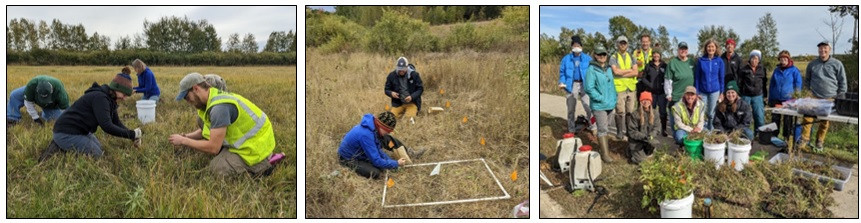
The Rare Plant Rescue team coordinates with the MNDNR and local developers to salvage rare plants before construction begins. The most recent salvage was focused on the State Threatened species Black Huckleberry (Gaylussacia baccata) which was listed as a threatened species in 2013. After locating the plants, the top layer of leaves and sandy soil were carefully brushed away to expose the root systems. Staff dug by hand through the sandy soil, following the woody rhizome until it was connected to another black huckleberry plant. Whole sections of black huckleberry were unearthed, placed in water and transported to the MN Landscape Arboretum (MLA). Staff and volunteers potted the plants so they can grow in a controlled setting at the MLA throughout the summer. MLA staff also took stem and root cuttings to experiment with different propagation methods.
Plants that survive the salvage will be transplanted into a protected site in the fall. The study includes documenting the habitat type of the salvaged site, propagation methods, and rare plants previously planted at protected sites are monitored annually. Approximately 80 Black Huckleberry plants were transplanted during this recent rescue in Ham Lake.
For more information on the Rare Plant Rescue program contact Carrie Taylor at
Six curb-cut rain gardens were installed approximately one-year ago and have been capturing runoff and its associated pollutants ever since. With each rainfall, runoff flowing in the street gutter is redirected into the rain gardens via a cut in the curb. Following a rain event, the water that enters the rain gardens is able to soak into the ground, which better mimics the natural hydrology before impervious surfaces (e.g. roofs, driveways, roads, etc.) and storm sewers directed runoff directly to Rice Creek. The rain gardens are able to store water and are filled with native species that were carefully selected for the site-specific conditions (e.g. light, soil type, and moisture).
Cumulatively, the six rain gardens are estimated to infiltrate 455,000 gallons of water, as well as remove 605 pounds of sediment and two pounds of phosphorus loading to Rice Creek annually. The native plants help to maximize infiltration and provide the co-benefit of pollinator habitat. One additional rain garden is located adjacent to a trail entrance into Locke County Park, providing an excellent public education opportunity.
These rain gardens were installed in partnership with the landowners, the City of Fridley, and the Rice Creek Watershed District. ACD provided design services and construction oversight.
The rain garden shown in the pictures below was planted last summer and as you can see, it didn't look like much at the time. Now, it looks beautiful and is full of flowers which pollinators love! This rain garden captures curbside runoff from 6.5 acres of neighborhood which previously went untreated to the Rum River. The native plant's roots create channels through the soil and reduce compaction, ensuring a maximum amount of water can infiltrate into the ground. The homeowners who worked with ACD to make this rain garden a reality, kept weeds at bay, and provided irrigation for the new plants during drought conditions!
Project funding was from the Clean Water, Land, and Legacy amendment, and the Lower Rum River Watershed Management Organization. To see other rain gardens installed throughout Anoka County, please see the virtual project tour on ACD's website.
For more information on rain gardens in Anoka County contact Mitch Haustein at
It can sometimes feel that the individual actions you make in your daily life cannot combat the massive environmental crisis facing our planet. The scale of action that needs to occur to curb climate change can feel overwhelming and give the impression that individual choices don't make a difference, so what's the point. This type of thinking is incorrect and unproductive. Although decisions we make as individuals may seem like a slow route to a more sustainable planet, these actions are what allow for larger scale social progress.
The MPCA developed an exceptional report: The Psychology of Sustainable Behavior, tips for empowering people to take environmentally positive action. This report focuses on the ideas behind why it is difficult for us as humans to change our behavior even when we know the negative environmental impacts. The MPCA provides insight into how to motivate and empower sustainable actions with the goal of creating social conditions where sustainable choices are the more appealing and natural choice. There are a few arguments to why individual sustainability matters and why it is a crucial component to overall social change.
Check out the full MPCA report on influencing sustainable behavior below.
This legislative session, the Minnesota Legislature passed Minnesota Statute 477A.23, subd. 4(b), providing funding to soil and water conservation districts (SWCDs) throughout the state. While this isn't new money, the funding comes from a different source that will make it more reliable and provide local flexibility.
For the last eight years, SWCDs have received funding through the Clean Water Fund of the Clean Water, Land and Legacy Amendment which required legislative action every two years. On average, Anoka Conservation District (ACD) received $125K/year with 2023 being $137K. Unlike most grants, this funding could be used for any project or program aimed at improving water quality. ACD could quickly tap into these funds to complete many small but critical efforts such as:
Where the previous funding fell short was that it couldn't be used for projects outside the scope of water quality, making projects such as habitat improvement, water conservation, and general public outreach and engagement ineligible. The new funds will replace Clean Water Funds and are distributed directly from the state through the Department of Revenue to SWCDs, cutting out mid-level agency involvement and reducing red tape. Now that these funds aren't restricted solely to water quality, SWCD's can use the funds where they are needed to properly address local priorities.
We are excited that for two years ACD will receive a bit more than past years at $179K. This will go down to normal thereafter.
For more information contact Chris Lord,
Gravel beds are designed to store bare-root trees and shrubs while enhancing root development. Gravel beds can be crafted from anything that can contain 18-inches of pea gravel, or can even be made from nothing more then piles of pea gravel.
Plants placed in gravel beds become stressed and put energy into creating fine root systems to find nutrients and water. After a few months, the well-developed root systems increase survival rates after planting by several fold. Gravel allows for root growth while making the plants easy to remove. Gravel also doesn't degrade and inhibits the growth of pathogens and weeds.
Bare-root trees and shrubs are easier to handle, cheaper to purchase, and come in greater varieties. Since bare-root plants are often only available in the early spring, the gravel bed can store bare-root plants for projects that have a summer or fall timeline. Plants with healthier root systems and higher survival rates are particularly important on projects where watering newly planted trees and shrubs is impractical.
ACD's gravel bed was envisioned and designed by Ethan Cypull, a Minnesota GreenCorps member that is currently stationed at ACD. Construction of the gravel bed was completed by Ethan and other ACD staff.
For more information contact Ethan Cypull,
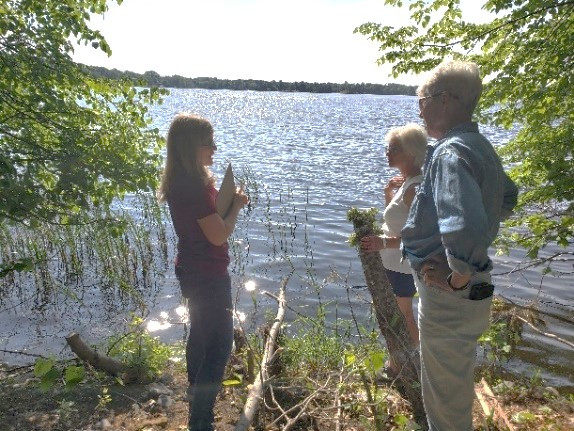
High water levels combined with strong winds impacted lakeshores throughout Minnesota this spring. In some cases, already-eroding and unprotected shorelines receded by multiple feet. In others, existing structures such as timber retaining walls were damaged – drastically compromising the land above. These occurrences highlight the importance of lakeshore practices that create resilient, stable, and healthy shorelines. ACD is working to maximize technical and financial resources to assist landowners with their shoreline restoration needs.
Martin Lake, located in northern Anoka County, was particularly impacted by spring flooding. Fortunately, grant funds were recently secured to provide assistance with restoration and stabilization efforts on this lake. Many landowners are interested in addressing erosion and improving wildlife habitat on their shorelines; in total, ACD staff met with residents at 20 different properties. Properties providing the greatest opportunities for water quality and ecological benefits will be selected for partial funding through available grants, and recommendations/ guidance will be provided for the remainder.
If you notice erosion on your shoreline or otherwise want to enhance its resiliency and ecological value, check out our "Our Lakeshore Connection" animated video to learn more: https://www.youtube.com/watch?v=dwjAoRwLrmM
Or contact Breanna Keith at
Approximately 1,500 feet of severely eroding riverbank in Mississippi River Community Park was stabilized in late 2021. The project included tree clearing, bank reshaping, riprap, erosion control blanket, seeding, and planting of a variety of native plant species.
Since installation, the site has been subjected to high water in 2022 and 2023. Both the riprap on the lower elevations of the bank and the vegetation on the upper elevations have successfully stabilized the site.
Moving forward, you may observe some vegetation maintenance to help the native species establish. Some examples include supplemental planting of native species and mowing to a height of approximately 6" to limit weed species from dispersing seed.
The project was funded by a Clean Water Fund grant, a Watershed Based Funding grant, and match from the City of Anoka.
For more information about the project contact Mitch Haustein at
Shorelines are some of the most valuable real estate. Both financially and ecologically. The Anoka Conservation District (ACD) has stabilized nearly 4.5 miles of eroding stream or riverbank and 1 mile of lakeshore over the years. When possible we use natural materials, a technique called bioengineering, to create stable, beautiful places that benefit lake or river health.
Near-record snowfalls in winter 2022-23 gave way to spring flooding that impacted many shorelines. Making matters worse, just after ice out there were several days of strong north winds. South shores of our bigger lakes took a beating. The shorelines most impacted were those that are mowed to the edge and without other protections such as riprap. Some of ACD's fall 2022 shoreline bioengineering projects were impacted because the vegetation had not had time to mature.
In recent weeks ACD staff have repaired damaged projects, including at Lake George (see photos).One of the beauties of bioengineering is that a few people with basic tools can make quick work of repair. After growing and establishing this summer, these lakeshores will be ready for whatever next spring brings.
Shoreline homeowners interested in creating stable, ecologically-friendly shorelines can contact Jamie Schurbon, Watershed Projects Manager at 763.434.2030 x210 or
Congrats to the Martin Lakers Association on their efforts to improve water quality. At their recent annual meeting 81% of member households contributed $7,000 to the group's Water Quality Fund.23 households gave $100 or more. Of this amount, $3,000 was a match provided by the Wally & Nancy Olson family in memory of Nancy. The Martin Lakers Association has used the funds to partner with the Anoka Conservation District on numerous projects including stormwater pond enhancements, rain gardens, carp management, and more that have approached $1M.Lake associations, citizen groups, and landowners are critical partners of ACD in most of what we do.
For more information contact Jamie Schurbon at
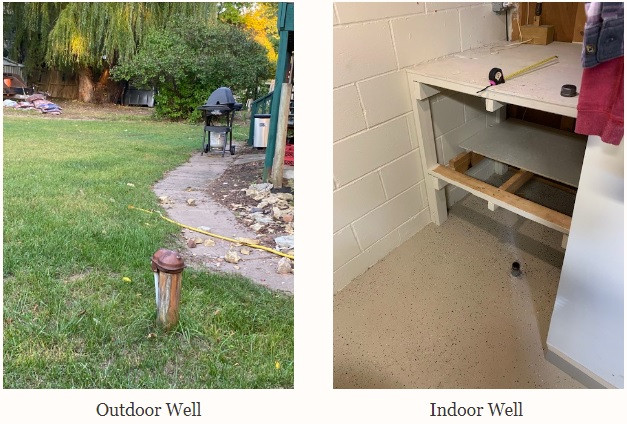
Unlike city water, water from private wells is not tested unless the homeowner tests it, which all are encouraged to do. To make it easy, Anoka County Public Health and Environmental Services Department offers testing. The homeowner collects the sample and delivers it to the government center in Anoka. Test kits can be picked up at most city halls. Costs are about $17 for each contaminant, with nitrates and coliform bacteria as the usual minimums to test.
For more information see www.anokacounty.us/water.
Recent extreme flooding has highlighted the dynamic and powerful nature of flowing water. If you live on a river or even a smaller stream, you've likely witnessed these characteristics and their impacts firsthand. With flood waters receding, now is a great time to assess the condition of your riverbank and consider stewardship and stabilization approaches that will help protect your property and the water you live on. Fortunately, we've created a brand new resource to help guide you through this process – the "Our Riverbank Connection" animated video!
Living by a creek, stream, or river provides many benefits and a unique opportunity to support water quality and wildlife. It also comes with some challenges such as erosion, which can eat away at your land over time. In this video, you will learn how to create a river-friendly lawn and riverbank that also protects your property by reducing or repairing losses from erosion. Video topics include:
Watch "Our Riverbank Connection" here: https://www.youtube.com/watch?v=Et9wLuIrRuA
Want to learn more about streams and rivers and how you can help them, even if you don't live on their banks? Watch Part 1 of the "Our River" Installment – "Our River Connection" – here: https://www.youtube.com/watch?v=rdQEcmLyQJI
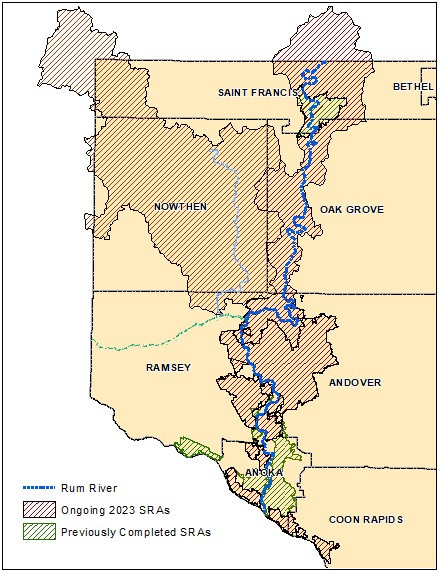
The Anoka Conservation District (ACD) has been a long-time partner of Conservation Corps Minnesota & Iowa (CCMI) and this tradition continues in 2023. This year, ACD was awarded 32 CCMI crew days to be used towards implementing streambank stabilization practices along the Rum River in Anoka County. Crews are deployed, a week or more at a time, to a specific project site. ACD will act as the project host to coordinate projects, provide equipment and materials, and utilize ACD's expertise for extensive on-site training and education.
The majority of Corpsmembers are recent college graduates and these field crew positions provide members the opportunity to learn how soil and water conservation districts and other professional organizations operate. ACD strives to provide in-depth training on project installation, project goals, site identification, and touch on other critical aspects of a project. Additionally, extensive time in the field allows ACD staff get to know the Corpsmembers and contribute insight into their professional development and growth within their career path.
CCMI field crews serve the greater outdoors by restoring habitat, managing natural resources, and occasionally responding to natural disasters or emergency needs of a community. The Field Crew program prioritizes personal and professional growth while teaching hands-on conservation skills in the field. Corpsmembers develop technical skills throughout their term while completing challenging and impactful conservation projects. Many projects are performed in partnership with public land management agencies such as the Department of Natural Resources, US Fish & Wildlife Service, National Park Service, cities, counties, and trail associations.
Working in a field crew blends hard work, community service, and environmental stewardship while also gaining additional life-long skills. Corpsmembers often have a transformational experience during their term, leaving them feeling more prepared for whatever comes next.
Visit the Conservation Corps website to learn more about the organization and available career opportunities.