Minnesota's Changing Climate

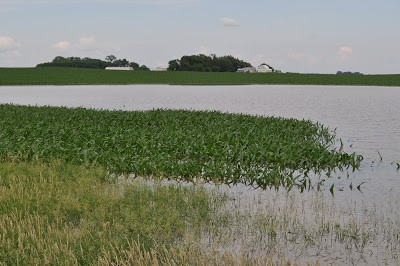
Flooding in a Southwestern MN Ag. Field

Minnesota is one of the states most impacted by climate change. Official precipitation and temperature data has been collected in Minnesota from 1895 through today, showing some striking statistics about our changing climate:

  • 13% increase in the size of the heaviest annual rainfall.
  • Since 2000, rains of more than 6" are four times more frequent than the previous 30 years prior.
  • 65% increase in the number of 3" rains.
  • Average temperatures in Minnesota have warmed by 3˚F since 1895.
  • Overall, Minnesota's climate is warmer and wetter.


These changes are impacting Minnesota's wildlife, forests, water quality, infrastructure, and outdoor recreation (especially winter sports). Below are some links to MN DNR infographic GIFs that shows the change to our 30-year average winter temperature and 30-year average yearly precipitation:
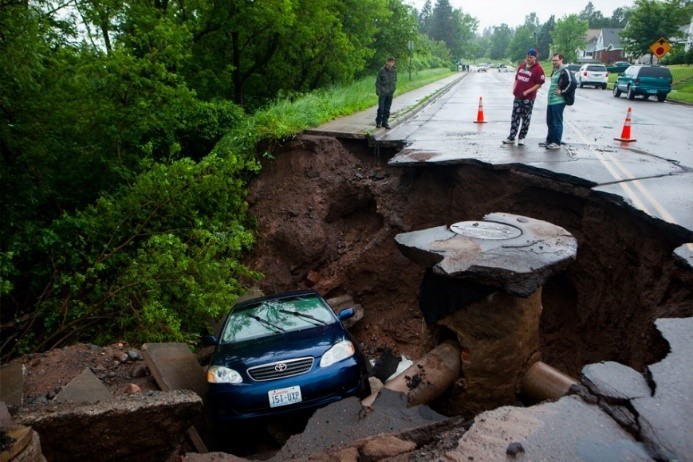
 

Sinkhole in Duluth Following a 7"+ Rainfall
As you can see, Minnesota's winters are warming dramatically, with the 9˚ contour moving  north by as much as 150 miles. Similarly, the 26" contour for precipitation has migrated roughly 100 miles to the Northwest.

We witnessed the impact of elevated precipitation in 2012 when the most damaging flood in Duluth's recorded history began when heavy rains fell over already saturated ground on June 19th and 20th. At the Duluth National Weather Service (NWS) the rainfall total for those two days was 7.24 inches. A NWS volunteer observer in Two Harbors recorded the storm's largest value of 10.45 inches in 24 hours.

The aftermath included millions of dollars of insurance losses to repair roads, bridges, homes and businesses. Many homes foundations were damaged extensively and the houses were razed. One state highway (MN 23) was closed for 3 years while it was repaired. The City of Duluth has had to adapt their stormwater infrastructure to withstand events that 30 years ago were considered 500-year events, but now happen regularly. In June 2018, just southeast of Duluth, the area received up to 10" of rain and once again damaged Highway 23.

Here in Anoka County, we've witnessed a similar story in 2019, with all of the monitored lakes, rivers, and streams in the County reaching historic water level averages for the year. This increase in precipitation only solidifies the need for comprehensive watershed management to make sure that our infrastructure and waterways can handle the increased erosion and flow produced by this additional rain. 

 Interested in learning more? Check out MN Pollution Control Agency's Climate Change in Minnesota webpage or the MN Department of Natural Resources Climate Data

  5547 Hits

New Outreach Collaborative Builds Lasting Partnerships in Anoka County

Investment in water education is vital for the continued health of the environment and people. By building strong new partnerships, the Water Resource Outreach Collaborative (WROC) in Anoka County is doing just that.

The purpose of this shared outreach and engagement partnership is to inform community residents, businesses, staff, and decision-makers about issues affecting local waterbodies and groundwater resources. Through enhancement of existing outreach programming and collaborative development of new programming, WROC engages people in activities and individual behavior changes that will positively impact the health of our surface and groundwater.

Through collaboration, WROC partners are able to maximize the effectiveness of their water outreach. Partners benefit from regular resource sharing, consistent messaging, and reduced duplication of effort. Outreach efficiency is maximized because partners are able to pool their resources to develop professional materials with minimal financial stress on any one organization. Many water health outreach topics are common between partners, so having a centralized group to facilitate delivery of those topics has proven vital. Finally, through increased communication between partners, there is greater cross-coordination and promotion of events, thus extending the reach of individual partner programs.

Since January 2019, Anoka County's Water Resource Outreach Collaborative has created new resources including a Conservation Resource Library and a brochure, display, and animated video on groundwater. In addition, the Collaborative has had a presence at 40 community outreach events throughout the county and facilitated or collaborated with partners to host 22 workshops, presentations, and trainings. Notable activities from the past year include presenting to over 630 5th graders in 7 schools in the county, hosting the best-attended private well and septic system training in with 58 attendees compared to 8-12 attendees in previous years, and hosting two smart salting trainings for 85 road maintenance staff from several previously untrained municipalities including Oak Grove, Columbus, Nowthen, Linwood Township, St. Francis, and Ramsey.

In the future, the Anoka County Water Resource Outreach Collaborative will continue partnering to reach new and diverse audiences with messages of water health and conservation. The WROC partnership is an investment in the future of water education in our area. Prioritizing public education is critical to empowering everyone to act as water stewards and create a healthier world for future generations.

The Water Resource Outreach Collaborative (WROC) is a fledgling partnership of cities and watershed management organizations in Anoka County dedicated to working together for efficient and effective public education about water health in our area. It is currently funded with a Watershed Based Funding grant through the Minnesota Board of Water and Soil Resources and is facilitated by the Outreach and Engagement Coordinator, Emily Johnson, who works out of the Anoka Conservation District office. Contact Emily at This email address is being protected from spambots. You need JavaScript enabled to view it.

Learn more here: Water Resource Outreach Collaborative

  4211 Hits

Cut back on Salt to Protect Minnesota’s Infrastructure, Water Quality, and Aquatic Wildlife

The Twin Cities Metro applies 350,000 tons of road salt every year, but have you ever wondered where it goes when winter ends?

Stormwater and snowmelt carry dissolved road salt into lakes, streams, and groundwater when winter thaws out. Chloride, a major part of road salt compounds, is especially stubborn in water. Once it dissolves, there is no feasible method to remove chloride from water, and stormwater treatment solutions like stormwater ponds and rain gardens are ineffective at removing chloride. Instead, chloride gradually accumulates in our water bodies, harming fish and other aquatic life. The corrosive nature of road salt also contributes between $350 million and $1.2 billion in infrastructure costs each year to the Metro area alone.

What can we do about it?

Here are some helpful tips you can use to make your driveways and sidewalks safer and better for the environment this winter:

Shovel!

Salt is never a substitute for shoveling. Shovel your snow and ice first so that salt is only used for melting ice stuck to the ground.

Salt!

Traditional salt (sodium chloride) does not melt ice when the temperature is below 15 degrees Fahrenheit. Use a low-temperature alternative such as magnesium chloride or calcium chloride to melt ice at lower temperatures or use sand to add traction. There is no such thing as an "environmentally friendly" salt, so it's best to stick to salt that will work in the given range of temperatures.

Scatter!

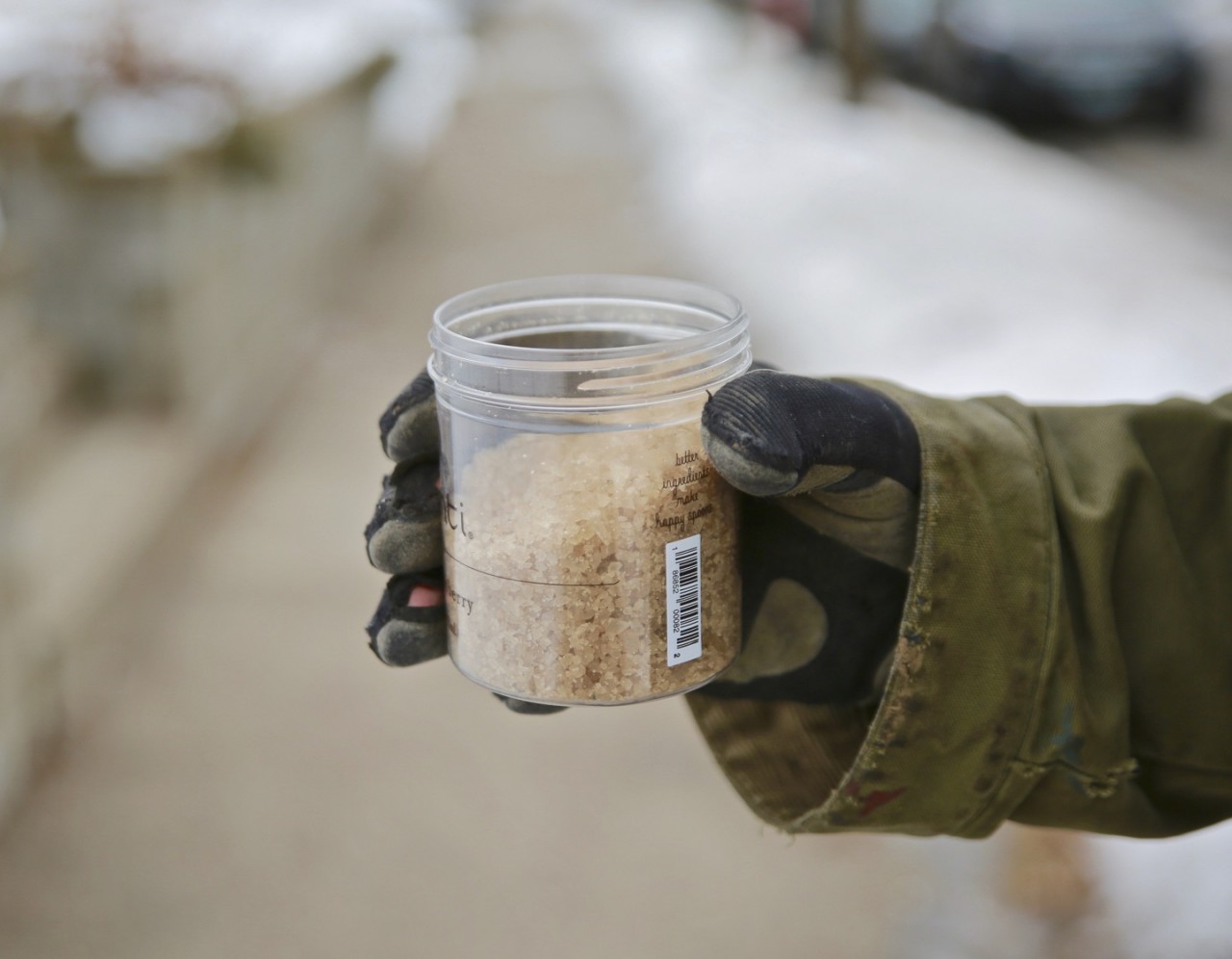
Did you know you only need a 12-oz. mug of salt to effectively de-ice a 20-foot driveway or 10 sidewalk squares? When applying salt, aim to leave 2" between grains.

Sweep!

Sweeping up leftover salt and reusing it later is a great way to save money and limit the amount of salt getting into nearby waterways.


 Do you hire a contractor to maintain a sidewalk, driveway, or parking lot? Check out the MPCA's list of Smart Salting certificate holders to find a contractor trained on best practices for winter maintenance: https://www.pca.state.mn.us/sites/default/files/p-tr1-01.xlsx

  3721 Hits

Why You Should Mulch Mow Your Leaves this Fall

Mulch mowing is the practice of mowing over leaves or grass clippings so that they become fine enough to reach the topsoil below this grass. This is an environmentally-friendly, time-saving alternative to raking and bagging leaves and grass clippings.

Mulch mowing kits work by using special blades that cut clippings into finer pieces than traditional mower blades. By mulch mowing, you're helping to cut down on pollution and waste by keeping the nutrients stored in the leaves and clippings out of local waterways and landfills. In turn, the mulch you produce helps build organic matter in your soil. It's a win-win!

Check out ACD District Manager, Chris Lord, demonstrating mulch mowing with a riding and push mower.

Soil organic matter is one of the most important indicators of a healthy soil. The chemical and physical properties of organic matter (i.e. dead plant material) help soil retain nutrients and water while reducing weed seed germination.

Talk to your local hardware or gardening store about installing a mulch mowing kit on your lawn mower. Kit are available for both riding and push mowers.

  3791 Hits

History and Management of the Rum River

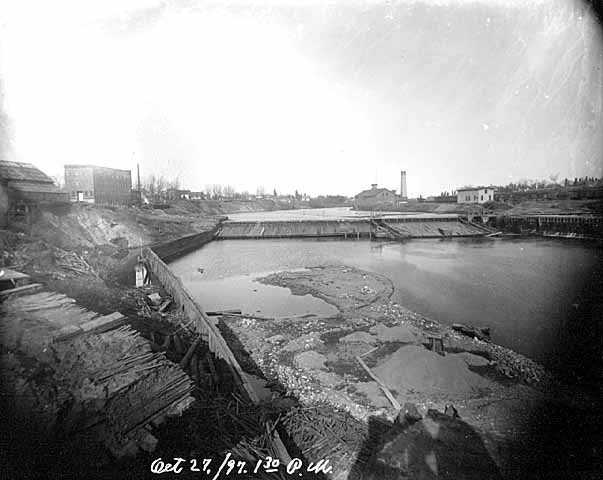
Anoka Dam, October 1897

The Rum River is one of the largest rivers in Anoka County, second only to the mighty Mississippi. It starts at the outlet of Mille Lacs Lake and winds through the landscapes of Mille Lacs, Isanti, and Anoka Counties until it discharges to the Mississippi River in the City of Anoka—but many don't know about the progress this river has made to become one of Minnesota's most outstanding waterways.

To really appreciate the Rum River today, it's good to understand a bit of its history. For many decades, the Rum River served as a large scale aquatic conveyor for lumber. Large white pine, elm, oak, cherry, and maple all floated down the river from central Minnesota forests to build the homes and business of the growing Twin Cities Metro Area. It also conveyed our sewage, agricultural waste, sediment laden runoff, and industrial by-products downstream to the Mississippi River, and eventually the Gulf of Mexico.

A former Anoka County commissioner who grew up in the area once said that when he was a kid, no one would dare to even fish in the Rum River, much less swim in it. I'm happy to say, over the last 80 years, the fate of the Rum River has been wholly reversed. Today the Rum River is:

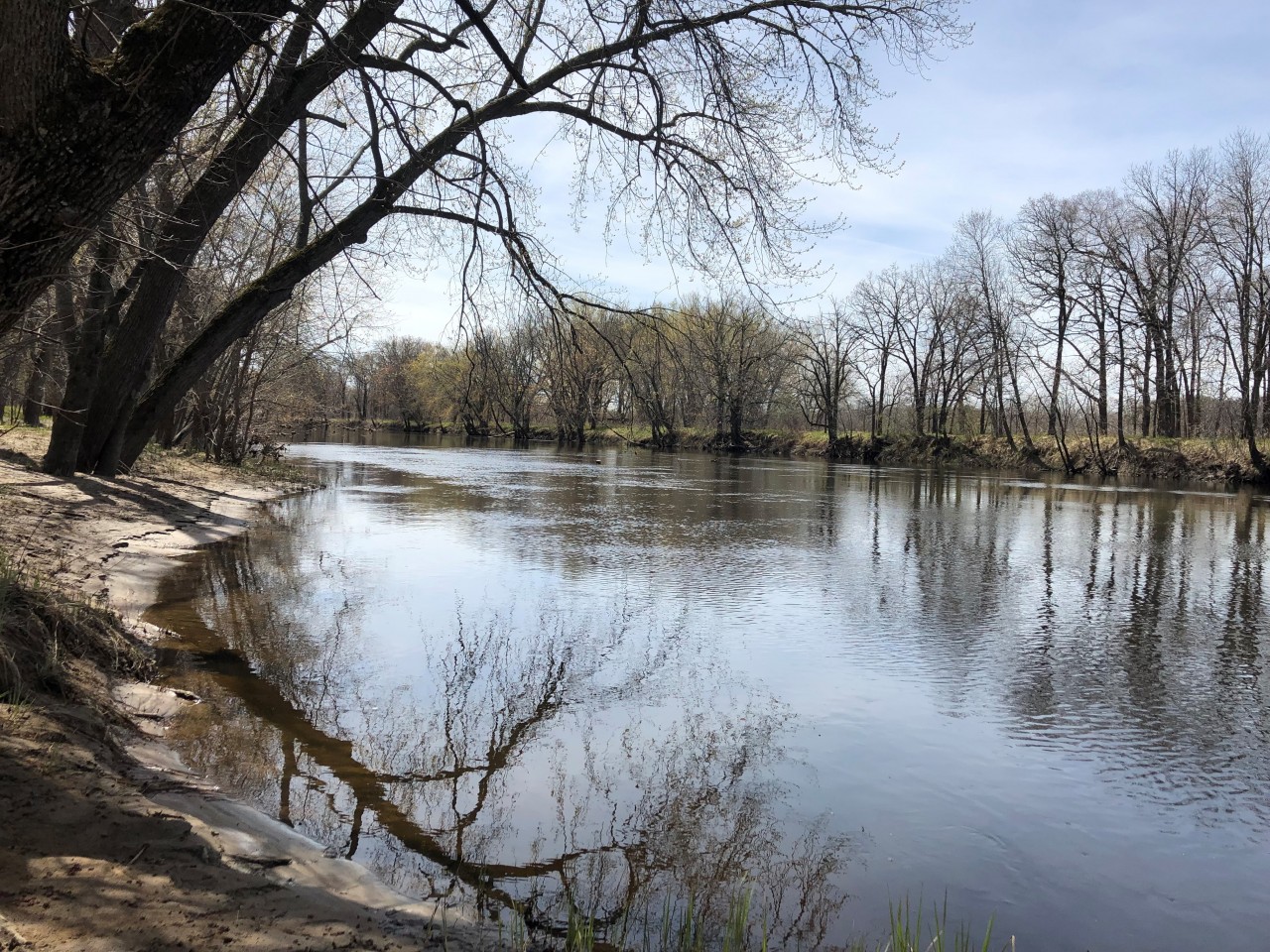
Martin's Landing on the Rum River
  • One of 6 Wild and Scenic Rivers and 35 State Water Trails in Minnesota
  • Designated as an Outstanding Resource Value Water
  • An excellent fishery and waterfowl corridor with abundant smallmouth bass and wood duck
  • Key reach for Species in Greatest Conservation Need

This isn't to say that our Rum River is in the clear. In the last 30 years, the population in the area draining to the Rum River has increased by 47%. With that many people came more roads, parking lots, and roof tops that added 74% more stormwater runoff. The increased water volume and speed that came with this extra stormwater caused the river to slice deeper into the landscape and rip apart the riverbanks. When riverbanks collapse into the river, the resulting sediment smothers the fish, amphibians, and reptiles that now call the river home. The Rum River is also increasingly threatened by road salt and nutrient pollution coming from this stormwater.

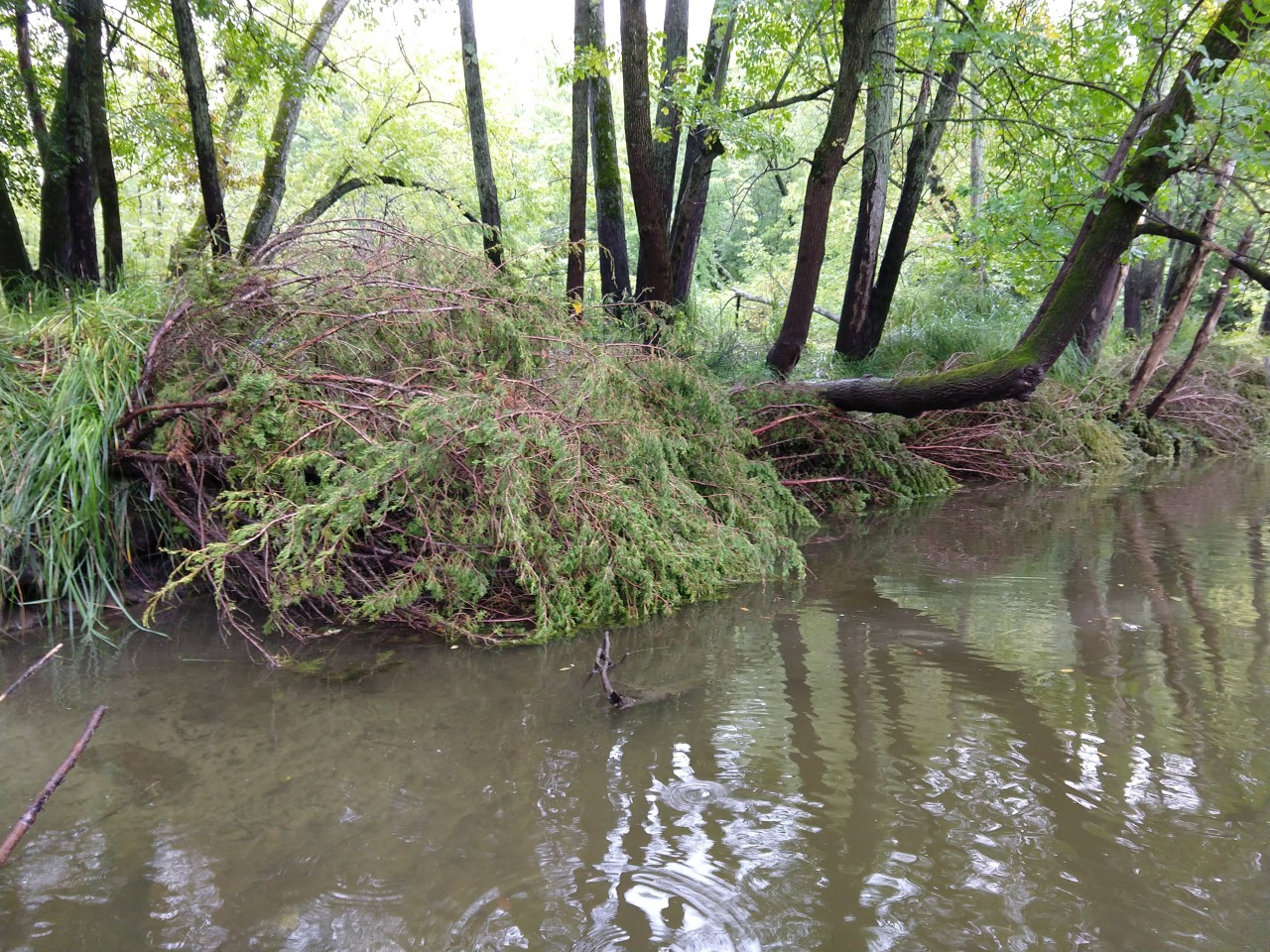
A Cedar Tree Revetment installed to stabilize a bank on the Rum River.

ACD takes a holistic approach to managing these new challenges to the quality of the Rum River. We are heavily involved with monitoring the chemistry and biological quality of the River; we assist the local Watershed Management Organizations with analysis and planning; and we implement projects with willing landowners to improve water quality and habitat in the river. ACD is also involved with guiding land conservation projects near the Rum River needed to protect habitat and water quality, and we are working diligently with other local organizations to ensure future funding for projects protecting the Rum River.

Over the coming months, we will be posting short blogs to highlight individual projects and programs that ACD has directed for the benefit of the Rum River. Check in soon at www.anokaswcd.org/blog to learn more!

  10251 Hits