Understanding the Minnesota Noxious Weed List

Minnesota's Noxious Weed Law is the policy of the legislature that residents of the state be protected from the injurious effects that noxious weeds have on public health, environment, public roads, crops, livestock, and other property. A noxious weed is a regulated plant species that has been designated as one of the four categories; Prohibited Eradicate, Prohibited Control, Restricted, and Specially Regulated.

The Prohibited Eradicate category include species that are highly damaging with limited distribution. These species are listed with the goal of eradication. Some examples found in Minnesota include Black Swallow-wort, Oriental Bittersweet, and the Tree of Heaven.

The Prohibited Control category include species that are highly damaging and widely distributed. The goal for species in this category is to prevent spreading. Examples in Minnesota include Wild Parsnip, Common Tansy, and Japanese Knotweed.

The Restricted Category include species that are highly damaging with an extensive distribution that limits the ability to control populations. The goal for these species is to prevent new plantings. Examples in Minnesota include Common Buckthorn, Non-Native Honeysuckle, and Garlic Mustard.

Specially Regulated plants may be native, non-native, or demonstrated value. The goal for this category of plants is to craft regulations that prevent issues. Examples in Minnesota include Poison Ivy, Amur Maple, and Winged Burning Bush.

Species on this list and new potential treats are reviewed by the Noxious Weed Advisory Committee. This committee is comprised of members that represent conservation, business, tribes, and government interests. A thorough risk assessment is completed for a species before a listing recommendation is made by the committee. You can report a potential population of a species on the Minnesota Noxious Weed List by taking a picture of both the leaves and flowers, taking note of the location, and sending it to the Arrest the Pest email This email address is being protected from spambots. You need JavaScript enabled to view it. or by filing out the online reporting form on the website https://mdaonbase.mda.state.mn.us/AppNetUF/UnityForm.aspx?key=UFKey.

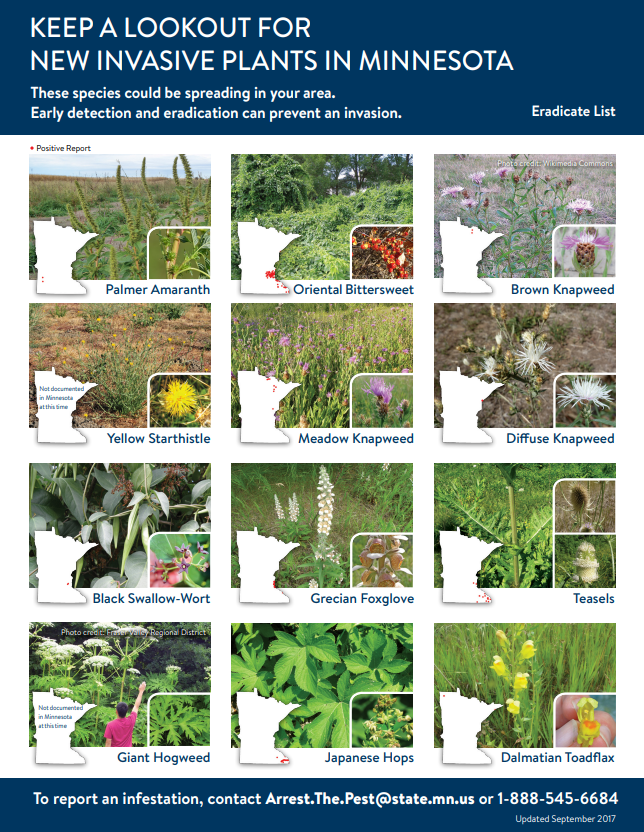
Below is a list of species to keep a look out for. Some of these species are already listed as Prohibited Eradicate in Minnesota and have very limited distribution. Looking for these species can prevent new populations from invading the state. Other species on the list have not yet been found in Minnesota, but have caused substantial damage in other parts of the country. Early detection and eradication is crucial in protecting Minnesota against invasive species. 
  7028 Hits

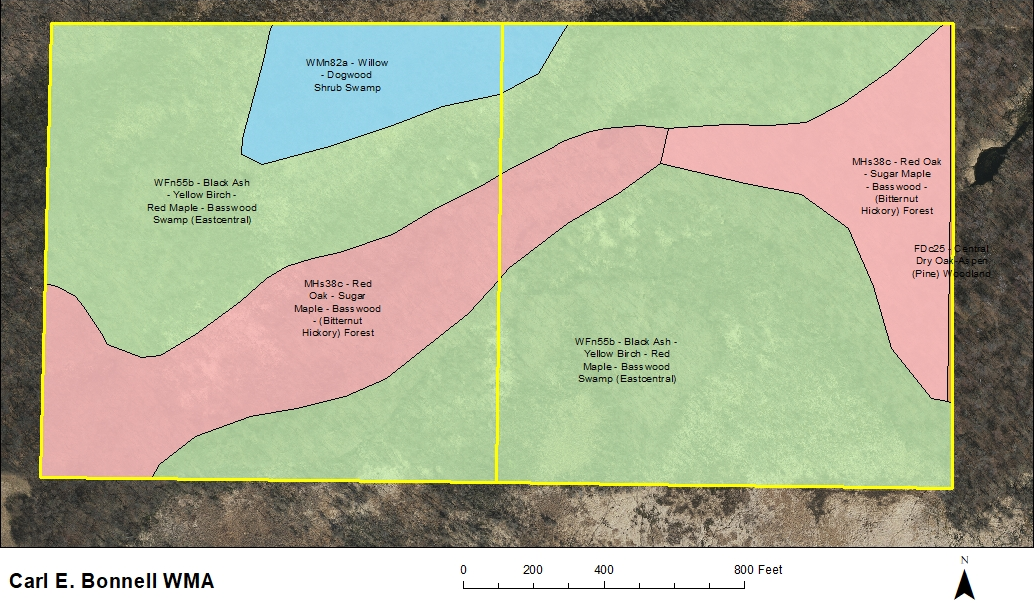
Buckthorn Removal at Carl E. Bonnell Wildlife Management Area

Carl E. Bonnell Wildlife Management Area consists of three Natural Plant Community types. This includes an upland consisting of Red Oak, Sugar Maple, and Basswood forest. The majority of the WMA is made up of two wetland types; this includes willow dogwood shrub swamp and black ash, yellow birch, red maple, basswood swamp.

Anoka Conservation District started buckthorn management at Carl E. Bonnell this winter. This involves removing large buckthorn with a chainsaw and treating smaller buckthorn with a basal bark treatment technique. Both common and glossy buckthorn have been found in the WMA.

Both glossy and common buckthorn are invasive species and are on the Minnesota Restricted Noxious Weed list. Removing and treating buckthorn is important to protect ecosystems. Buckthorn grows thickly and outcompetes native plants for light and nutrients once established. 

  2998 Hits
Tags:

Minnesota’s Buffer Law

Minnesota's Buffer Law was enacted to help keep Minnesota's water clean. Buffers are also known as a riparian filter strip adjacent to a stream, river, lake, or wetland. These buffers filter out phosphorus, nitrogen, and sediment. Studies completed by the Minnesota Pollution Control Agency show that buffers are critical to protecting and restoring water quality, natural stream functions, and aquatic habitat and life.

Buffers are required along public waterways and ditches. Public waterways include lakes, rivers, and streams. This type of waterway requires a 50-foot average buffer. Buffers of 16.5 feet are required along public ditches. The original buffer law was signed into law in 2015, and after several modifications, the deadline for implementation for public waterways was 2017 and 2018 for public ditches.

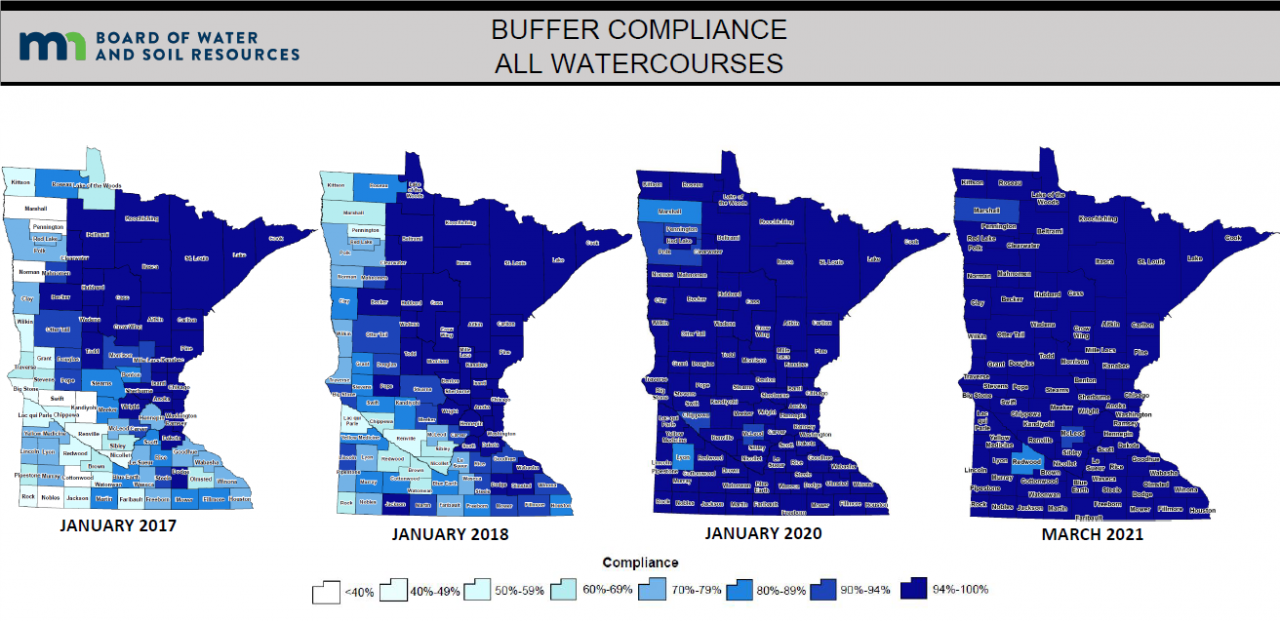
Buffers are required to be vegetated with perennials. This includes hay and forage crops such as alfalfa and clover, woody vegetation, perennial grains that can be harvested later, and prairie vegetation. This vegetation is key to helping keep Minnesota's water clean. Since 2017, soil and water conservation districts, including ACD, have worked hard to help bring all applicable parcels into compliance. The map below shows this hard work and that most of Minnesota are 94% to 100% compliant. For more information please contact Mollie Annen, This email address is being protected from spambots. You need JavaScript enabled to view it., 763-434-2030 x180

  2913 Hits

If you see green, it might be buckthorn. Fall and winter are a great time for buckthorn treatment.

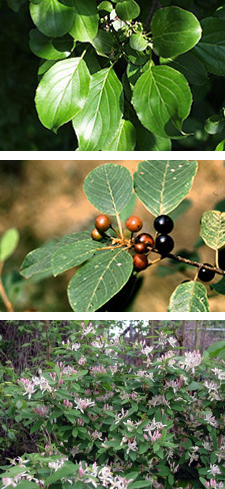
Late fall is a great time to assess your property for woody invasive species. The three most common woody invasive species that are found in Anoka County are Common Buckthorn, Glossy Buckthorn, and non-native Bush Honeysuckle. These three species tend to hold on to their leaves long after our native trees and shrubs. Since the leaves on these invasive species also tend to stay green instead of change color like our native species, they stick out like a sore thumb this time of year. These species can easily out compete native woodland species, deteriorating our woodlands and wetlands.

Common Buckthorn:

Common Buckthorn tend to look like a large shrub or small tree, reaching approximately 20 feet when fully grown. The most distinct characteristic of Common Buckthorn is the twig endings often contain small, sharp, stout thorns. When Common buckthorn is cut down the heartwood also have a distinctive orange color. This tree can be easily confused with our native plums and cherries.

Glossy Buckthorn:

Glossy Buckthorn has a similar structure as Common, they tend to grow like a large shrub or small tree, reaching approximately 20 feet. Glossy Buckthorn can be found in forests, but tend to favor wetlands and wetland edges. Glossy Buckthorn does not contain any thorns but also has a yellowish orange heartwood when cut. The look-alikes for Glossy Buckthorn include some native dogwoods and alder.

Non-native Bush Honeysuckle:

Non-native Bush Honeysuckle is a shrub that typically grows 8 to 12 feet high. The older Honeysuckle often have a shaggy tan bark and stems that are often hollow. The leaves on the Honeysuckle are opposite, simple, oval, and untoothed. The shrub produces pink and white flowers in the spring.

Find more information on common and glossy buckthorn ID and treatment methods on the Anoka CWMA website.

  3339 Hits

Biomonitoring with High School Students

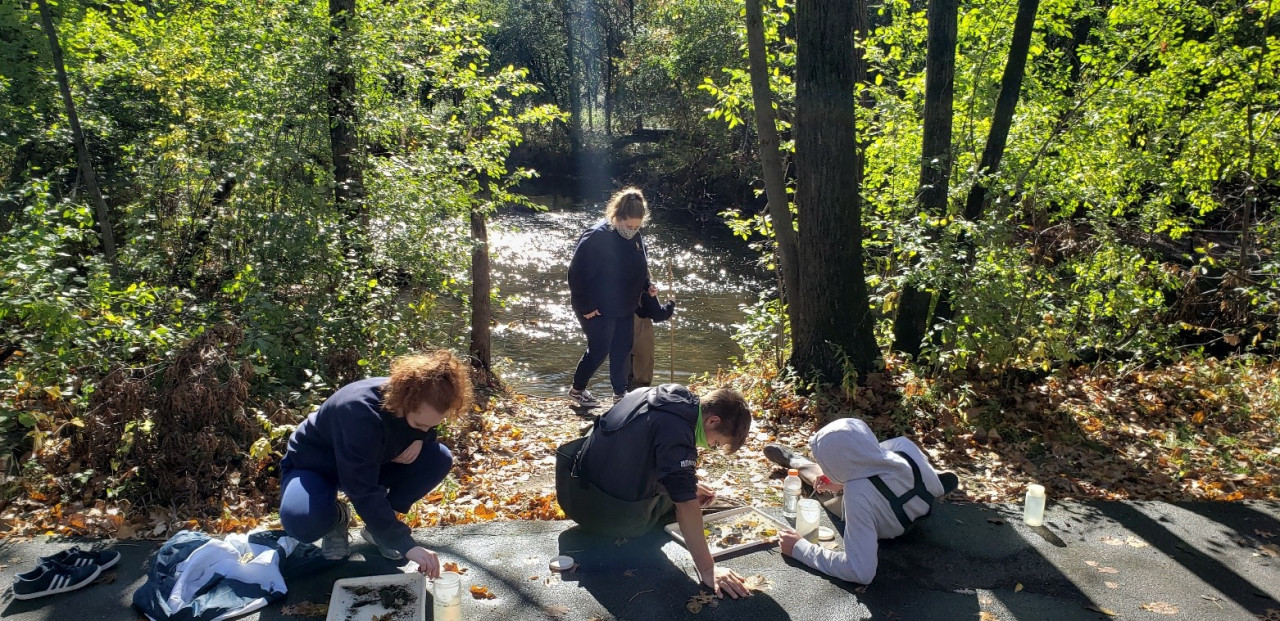
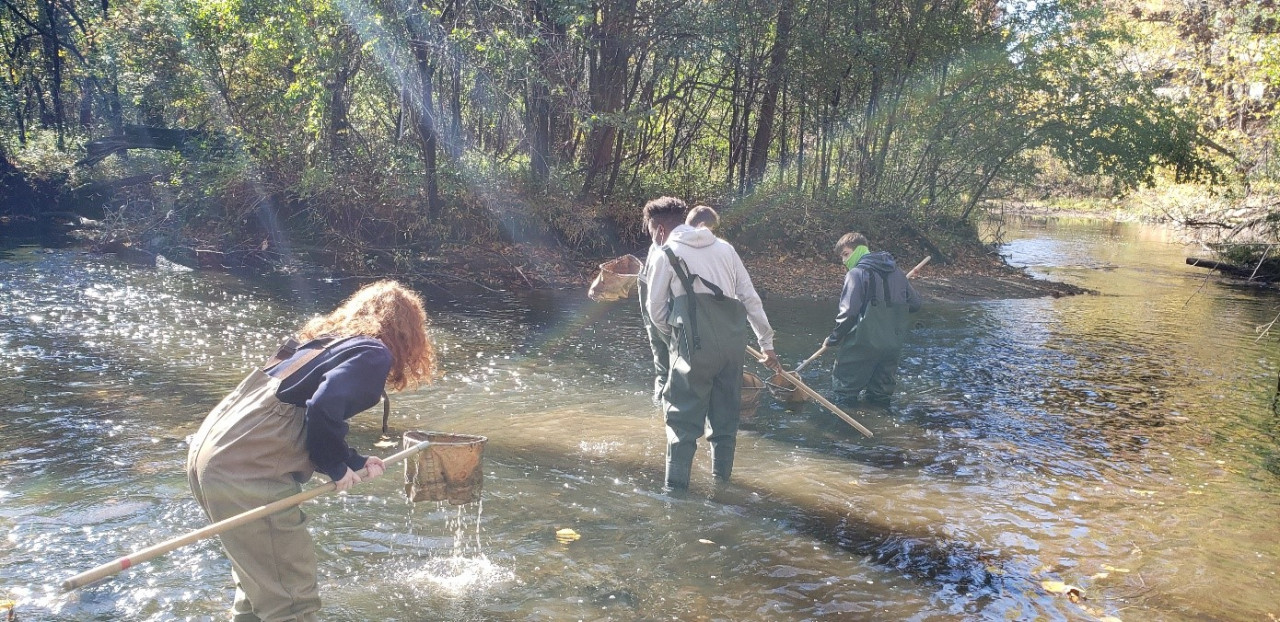
Every spring and fall, staff members from Anoka Conservation District lead several high school classes through a hands on biomonitoring session. These students don waiters, grab a D-net, and wade into the shallow waters of a particular stream or river in Anoka County. They use these nets to scrape rocks, down trees, or vegetation in hopes of finding macroinvertebrates, which are collected. During the classroom potion of this lesson, the students identify and label these macroinvertebrates species. ACD then reevaluates and counts all specimen. The same stream and river locations are sampled almost every year, allowing ACD to monitor any long-term trends in the species found.

Biomonitoring is a useful tool because macroinvertebrates live on the bottom of rivers and streams. During their aquatic life cycle, which can be multiple years, they cope with chemical, physical, and biological influences in their habitat. They are less mobile than fish, making them less able to avoid the effects of these pollutants and changes to aquatic habitats. Macroinvertebrates also have a wide range of pollutant tolerances amongst the various species. The numbers and types of organisms present in a water body reflect the quality of their surroundings. Inventorying the makeup of aquatic communities can help determine if changes in the environment are causing effects such as the loss of sensitive groups of organisms. Macroinvertebrates are also practical and easy to sample, making them perfect for a high school science class. 

  2459 Hits