
MNDNR Evaluates Cedar Revetments in Anoka County 

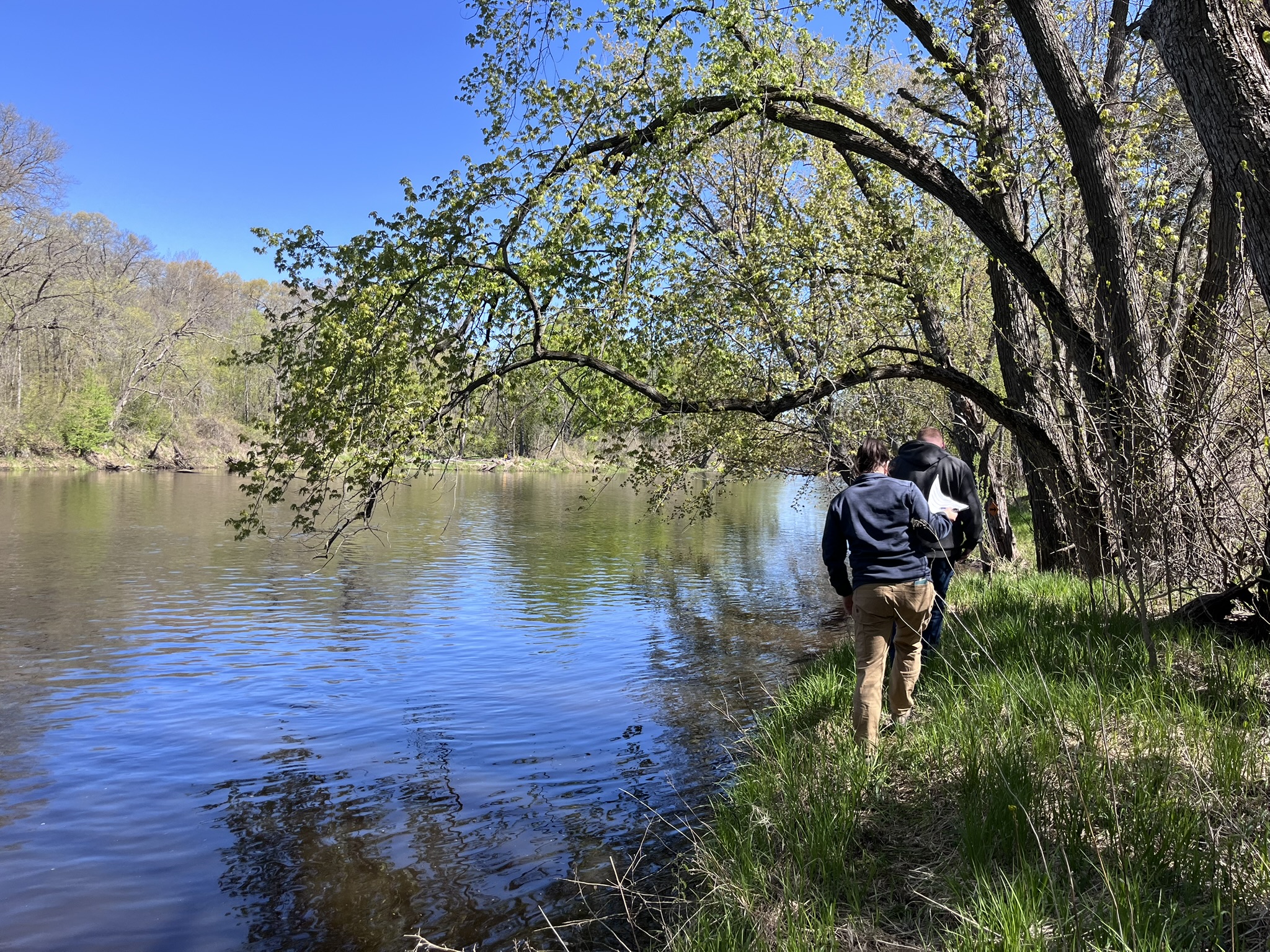
Photo: Anoka County Parks Manager, Quinn Palar, and CPL Program Administrator, Amy Yoelin, walking on top of a Rum Riverbank in Anoka County.

The Rum River has over 7 miles of shoreline with some degree of erosion. Riverbank stabilization practices protect property, enhance shoreline habitat, and improve downstream fisheries by improving water clarity and protecting spawning areas. Cedar tree revetments are among the most cost-effective means of addressing moderate riverbank erosion before it worsens.

Anoka County Parks was awarded a Conservation Partners Legacy grant to install 2,500 feet of cedar revetment on eroding sections of the Rum River. ACD was contracted by Anoka County Parks and completed this work between 2023 and 2025. ACD overdelivered by installing 2,933 feet of revetment within available funds.

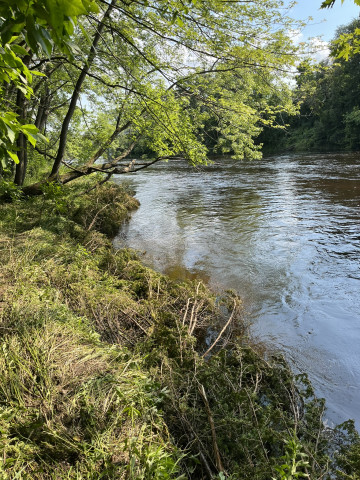
Cedar tree revetments use Eastern red cedar trees anchored along an eroding riverbank to slow the current. This decreases erosion and allows silt and sand to deposit. The deposited material forms a seedbed. By the time the cedar trees have decayed, the bank is stabilized by the roots of the living trees. 

Photo: A cedar revetment installed on the Rum Riverbank to slow the current and reduce erosion.

The MNDNR was excited about what they saw and encouraged Anoka County Parks to continue their revetment program, which is now in its 3rd phase. With the support from the state, Anoka County Parks will likely apply for another phase of funding this coming August.

Restoring streambanks and establishing habitat along public riverbanks will benefit the thousands of Anoka County residents who frequent local parks, as well as Rum River enthusiasts each year. For more information, contact Kris Larson, Water Resource Specialist, at This email address is being protected from spambots. You need JavaScript enabled to view it.

  82 Hits

Disposing of Household Hazardous Waste

Unusable or unwanted chemicals are considered hazardous waste when their disposal poses an environmental or health threat. When disposed of in the garbage, down the drain or on the ground, some household chemicals can threaten our environment, harm garbage collectors or hurt you. Most household hazardous wastes are hazardous because they are flammable, corrosive or toxic.

Characteristic words indicate the type of hazard posed by a product - flammable, corrosive or toxic. Look for the signal words on the label. Signal words - caution, warning, danger, poison - indicate the product's degree of hazard. The facility accepts household hazardous waste from residents of Anoka, Carver, Dakota, Hennepin, Ramsey, and Washington counties. Businesses, schools and other organizations may NOT use the HHW facility. There is no charge to use the site. Bring identification, such as a driver's license, as proof of residency.
For more information on hazardous waste, contact the Anoka County Hazardous Waste Facility. Below is a brief list of just some of the accepted household items.  

  • Aerosol Cans
  • Antifreeze
  • Driveway sealer
  • Fluorescent and HID bulbs and CFLs
  • Gasoline and other fuels
  • Household batteries (alkaline, lithium ion, cell phone, power tool
  • Lead and lead tackle
  • Mercury
  • Paint (liquid only)
  • Paint thinner
  • Pesticides
  • Propane tanks
  • Used motor oil
  • Used oil filters
  • Varnish
  • Wood preservatives
  • Other household products 

  2395 Hits

Monitoring Drought Strategically

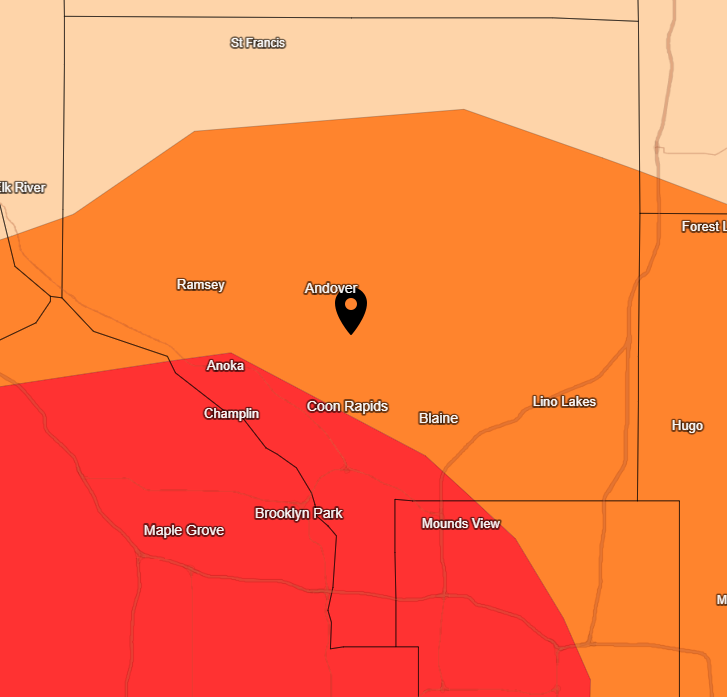
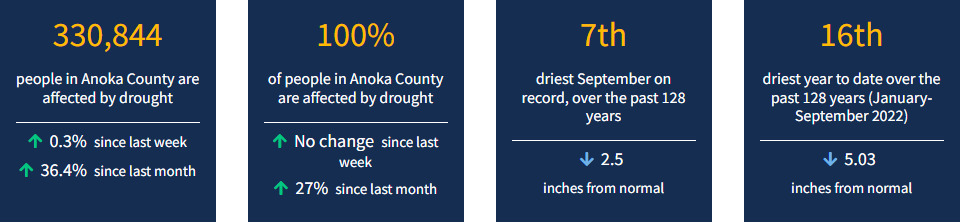
The majority of the state is currently experiencing drought conditions, including Anoka County. The U.S. Drought Monitor (USDM) is a map that is updated each Thursday to show the location and intensity of drought across the country. Drought categories show experts' assessments of conditions related to dryness and drought, including observations of how much water is available in streams, lakes, and soils compared to usual for the same time of year.

Each week, drought experts consider how recent precipitation totals across the country compare to their long-term averages. They check variables including temperatures, soil moisture, water levels in streams and lakes, snow cover, and meltwater runoff. Experts also check whether areas are showing drought impacts such as water shortages and business interruptions. To learn more about current drought conditions in Anoka County and other areas of the country visit https://www.drought.gov/states/minnesota/county/anoka

Anoka County
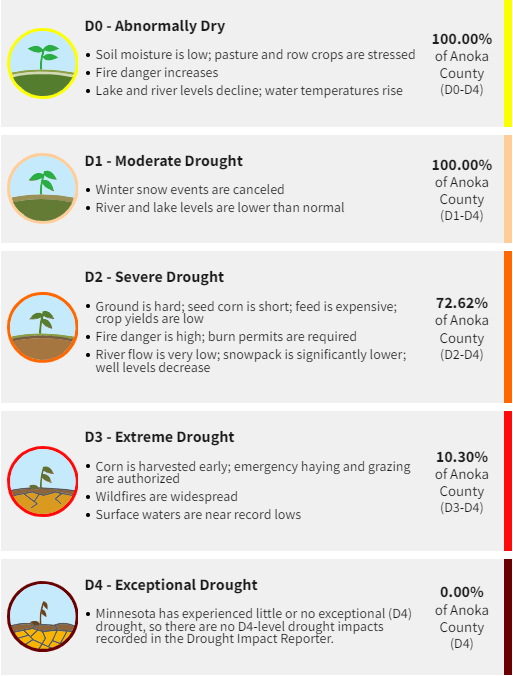
USDM’s five-category system
Current drought statistics for Anoka County
  2982 Hits

Spiders: Friend or Foe?

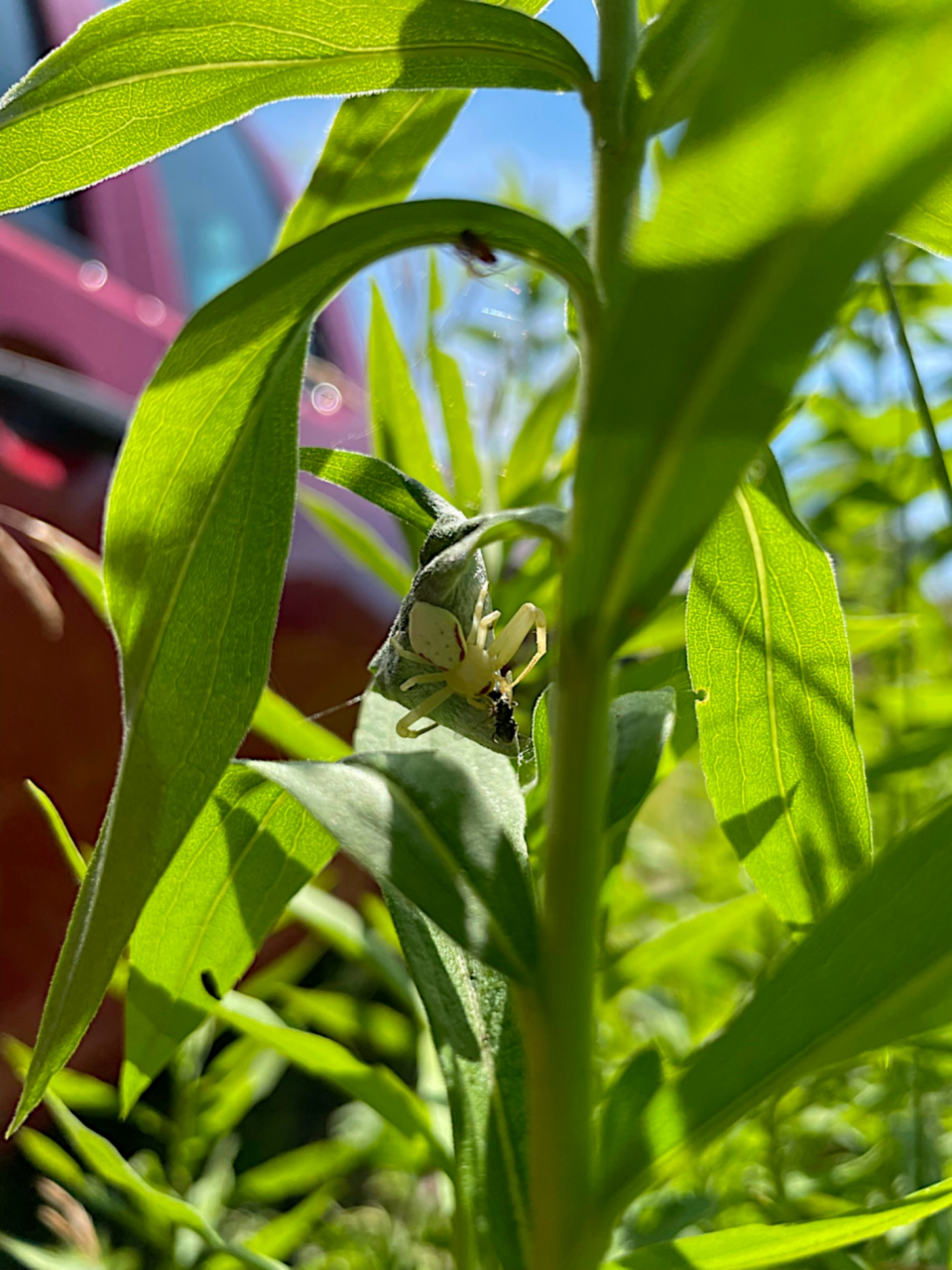
White crab spider with its prey


We have all noticed spiders in our homes or when we are out for a walk. Most of the time, we view them as gross or something to fear. Instead of instantly thinking of spiders as pests that we want to kill or remove from the home, we should try to gain a better understanding of the important role these creatures play within the ecosystem.

Minnesota is home to 519 different species of spiders, including a species of 'jumping spider' that has only been found in Anoka County. 7 of the spider species found in the state are poisonous, but a spider bite resulting in death hasn't been recorded in the United States for decades. Less than 0.5% of spider bites lead to major medical complications.

The main benefit that spiders provide is that they eat a massive amount of insects, consuming on average between 400 and 800 million tons of bugs globally every year. Not only do spiders eat common pests like mosquitos and flies, they also act as a natural insecticide, eating many insects that are known for destroying crops or gardens.

To learn more about why spiders are important, please visit our friends at the Three Rivers Park District: https://www.threeriversparks.org/blog/myths-and-facts-spiders

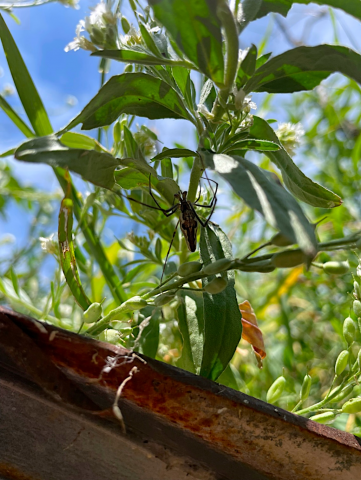
Black and yellow garden spider
  3480 Hits

ACD Receives Grant for Abandoned Well Sealing Cost-share Program

In Anoka County, 330,000 residents (94% of the population) depend on groundwater for drinking water, using about 12 billion gallons annually.

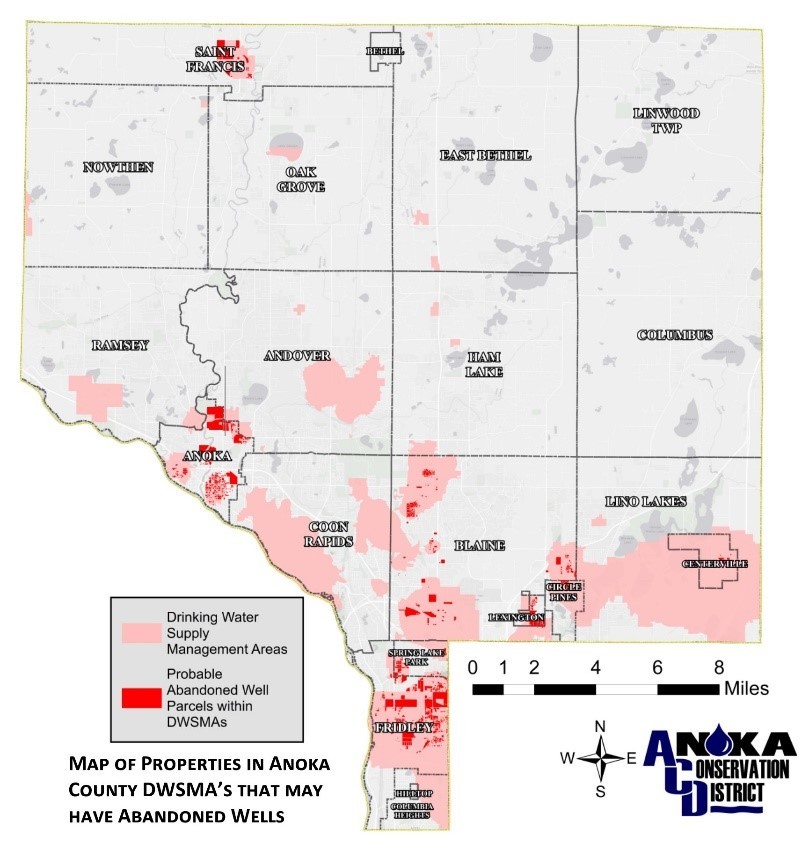
In 2015, Anoka County identified more than 2,300 properties in Drinking Water Supply Management Areas (DWSMAs) that have a high potential of having an unused/unsealed well (see map to left). These abandoned wells pose a risk to human health by providing a direct, unmaintained conduit where contaminants, such as pesticides, nutrients, heavy metals, salts, hydrocarbons, and pathogens, can be introduced into groundwater drinking water supplies.

Anoka Conservation District (ACD) was awarded a Clean Water Fund grant to coordinate a cost-share program to financially incentivize Anoka County property owners to hire licensed professionals to seal abandoned wells in high priority areas (i.e. within DWSMAs).Through targeted outreach, ACD will identify landowners interested in participating, and the program will provide funding to seal up to 125 abandoned wells.


  3619 Hits