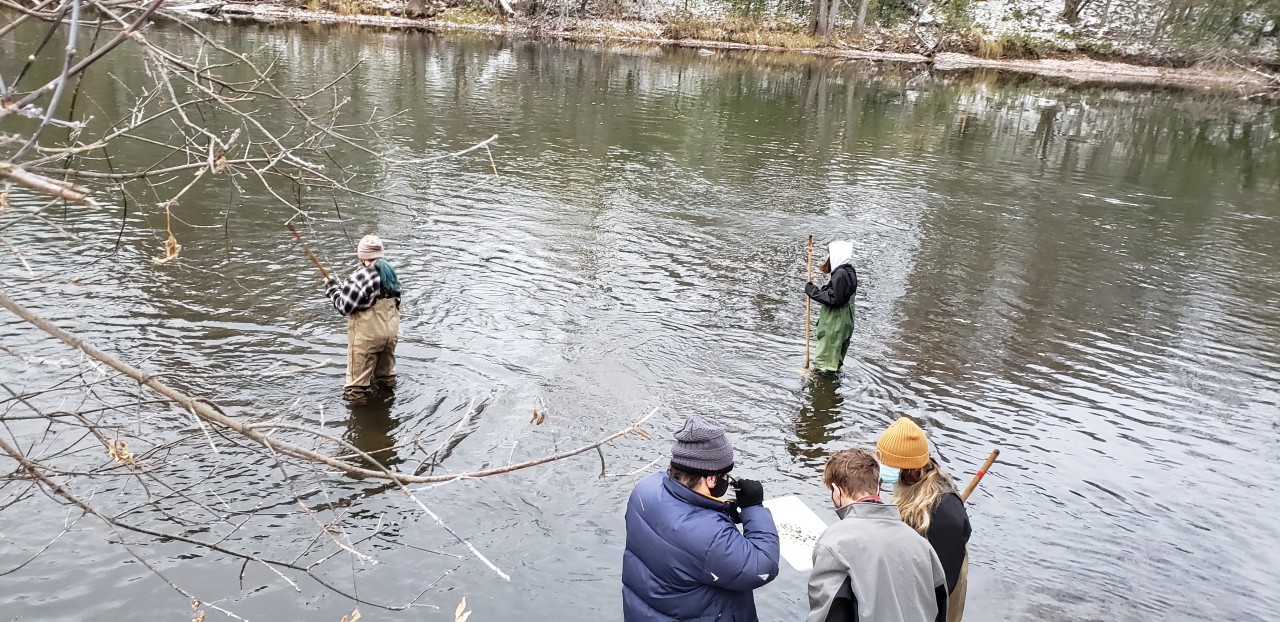
One activity that ACD does every year is take local high school students to streams near their schools to collect macroinvertebrates. Many of these organisms are the larval forms of many of our common insects. Think mosquitoes, mayflies, black flies, and dragon flies. Assessing the community of invertebrates living in a stream over time can give us a good indication of how healthy that stream is (i.e. how good the water quality is). This is because the different types of these invertebrates have varying levels of tolerance to polluted water. Some can only live in very clean water, while others can survive in very polluted water.
This exciting lesson combines a field trip to a stream and the opportunity to play in the water, with a lesson about the natural world and how we can use the biotic organisms living in those streams to monitor their health over time. In the midst of the COVID-19 pandemic, we had to think outside of the box to make this fun and important lesson happen in 2020. In the spring of 2020, we were not able to do this lesson with any schools, because all of them were full time distance learning, and we had never prepared a distance learning lesson before. This fall however, we got a little more creative.
I made a virtual lesson via Go Pro video with a teacher from the Forest Lake Area Learning Center and his sons. With Totino Grace and St. Francis High School students, we worked in small groups in the field with masks on, disinfecting all equipment between classes. We also had classes attend virtually while a teacher held the live feed camera up and talked to the students that were attending online. Overall, whether by recording, live video stream, or in person at the river respecting social distancing and mask wearing, just about 200 kids still got to take part in this activity from the three schools mentioned. It took a little more time and effort than usual, but in the end we made sure a large number of local students still got the opportunity to take part.